By Janet Blümli, Basle
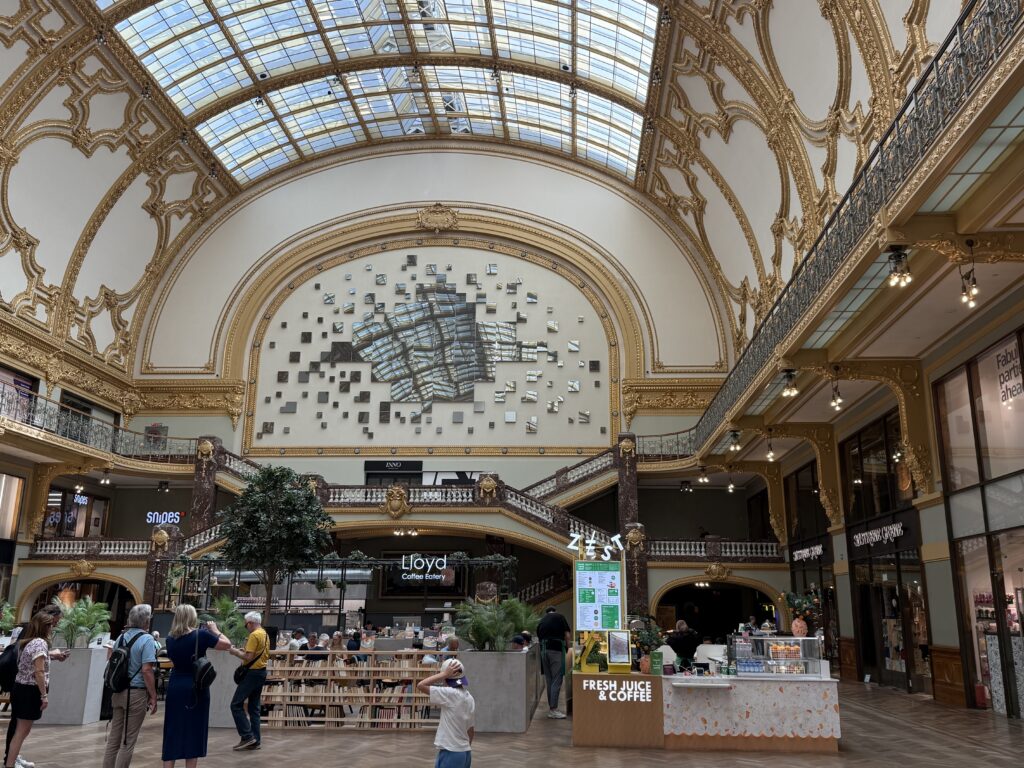
We had a most interesting excursion to Antwerp, Belgium’s second biggest city and one of the world’s most important ports. Our visit started at the Antwerp Central Station, an unbelievably grandiose building colloquially named the ‘railway cathedral’, built between 1895 and 1905 in an eclectic mixture of architectural styles. Originally a terminal station, it was expanded from 1998-2007 as a through station, also accommodating high-speed trains.
Next to the station is the diamond quarter, a number of small quiet streets with rows of jeweller’s shops and the four diamond bourses. Approx. 85% of the world’s rough diamonds pass through Antwerp, although they are now mostly cut in other, lower-wage countries like India or Dubai.
From there we passed through the main pedestrian area with a great number of historic buildings in the Gothic, Baroque and Renaissance style, even though they do not actually date from that period. It can be seen from these grandiose buildings the immense wealth that the city’s merchants accumulated (and wanted to show!) through their trade with other European countries, Africa and Asia in cloth, wines, salt, fish, sugar, etc.
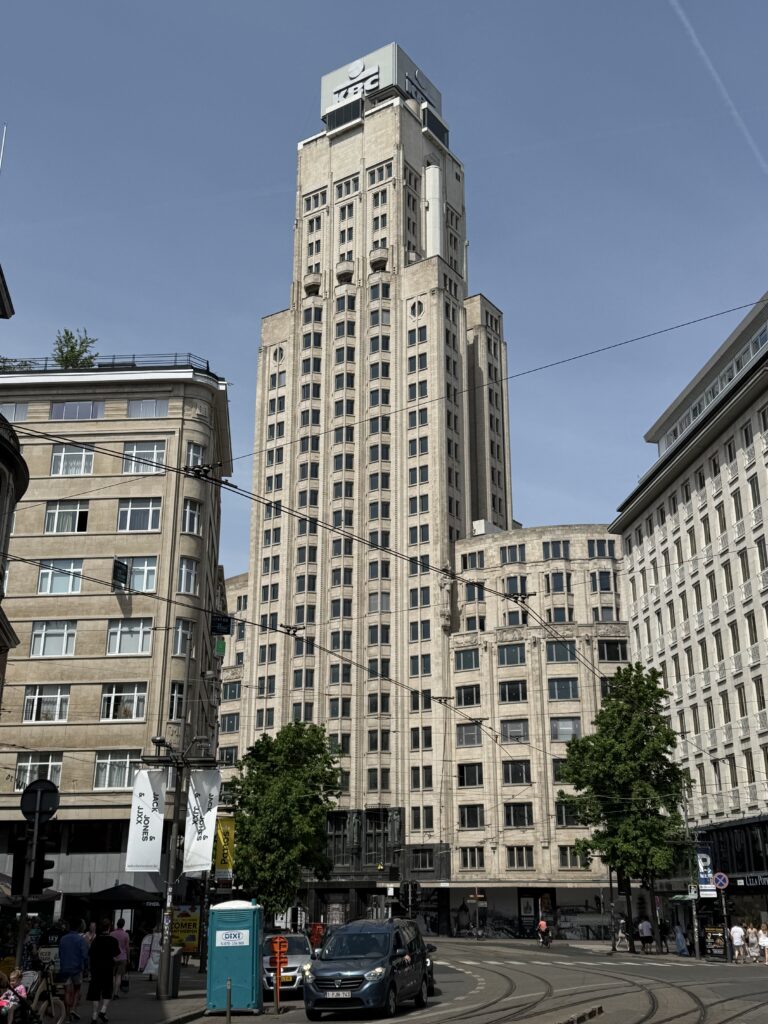
A landmark building at the end of the main shopping street is the ‘KBC Tower’ an imposing Art Deco building, which was designed in anticipation of the world fair of 1930 to mark the centenary of Belgian independence and at the time was the second tallest building in Europe. It is currently undergoing major refurbishment.
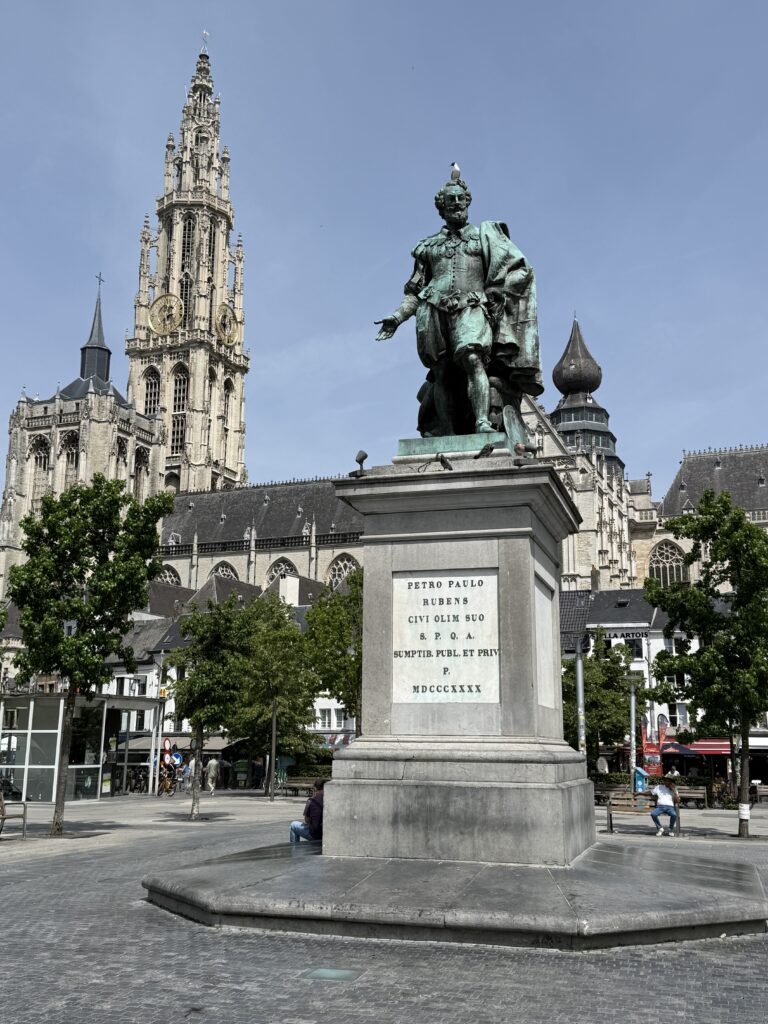
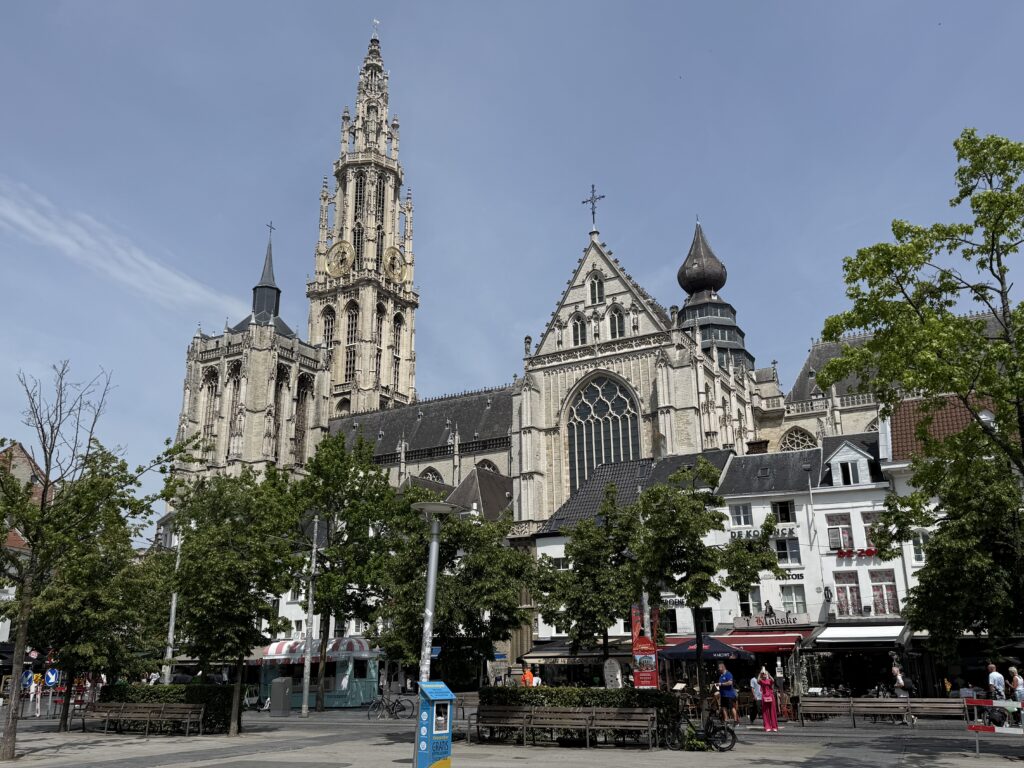
We stopped at the original house and atelier of Peter Paul Rubens, which is currently also undergoing major refurbishment. There is a statue to Rubens in front of the Cathedral of Our Lady, which houses several important paintings by Rubens.
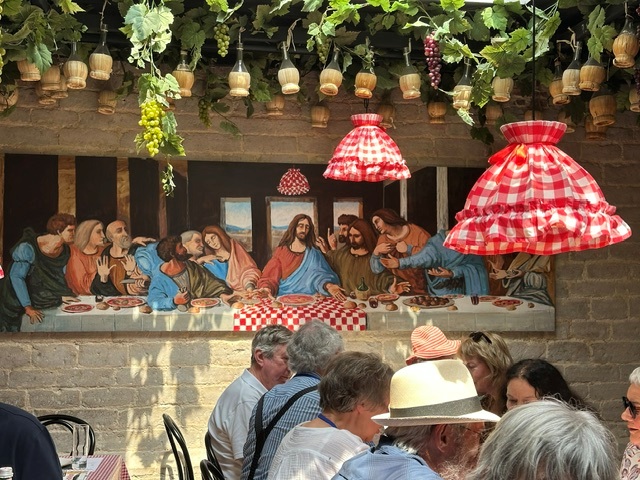
Adjacent to the cathedral we were treated to a very authentic Italian lunch with bruschetta, antipasti, pizza or pasta, all under the watchful eyes of the last supper of Christ – adapted to the decors (see photo)!
Winding our way through tiny back alleys, we passed the Plantin-Moretus Museum, which is a UNESCO World Heritage Site. The museum contains the original 16th century printing type which was used, among other publications, to print the eight-volume, multi-language Plantin Polyglot Bible with Hebrew, Aramaic, Greek and Syriac texts, one of the most complex productions of the period.
We admired the main market square Grote Markt with Antwerp City Hall, the 16th century guildhalls and the beautiful fountain at its centre.
From there we then made our way to the water’s edge at the Westerschelde estuary with a view to the medieval fortress of Het Steen dating from around 1200-1225 before catching the bus taking us back into the centre of Brussels. A wonderful day out!