By Ana Preočanin, London
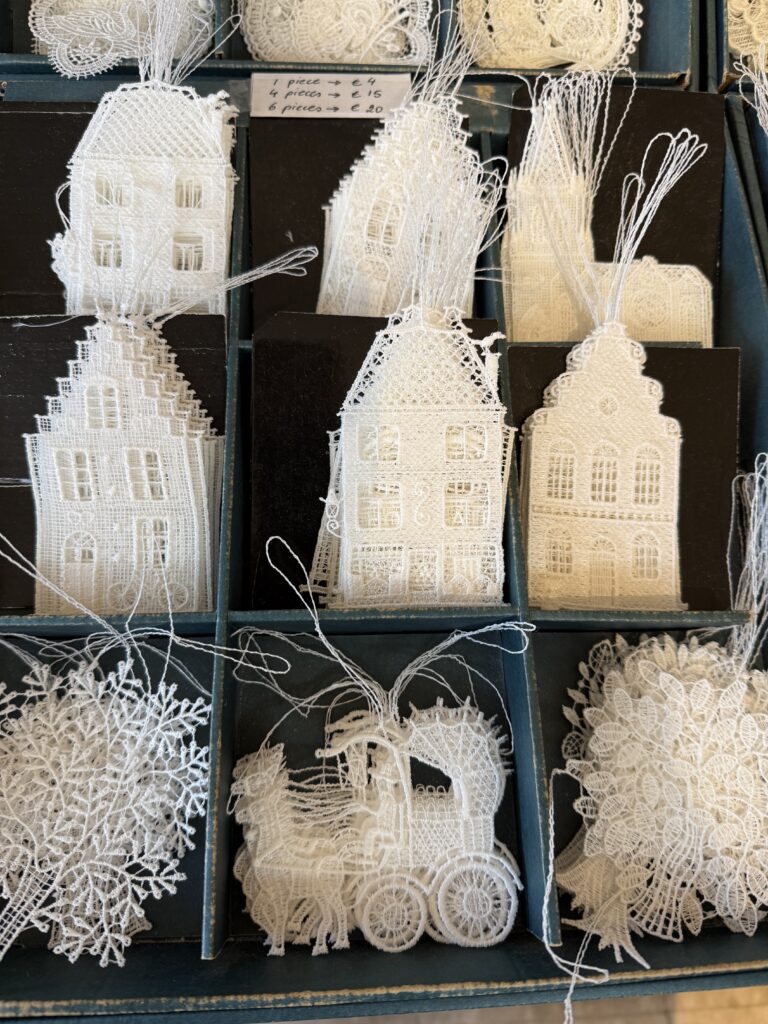
One tour that offered us a delightful cultural feast of history, culture and heritage, not to mention picturesque waterways and medieval buildings was the beautiful city of Bruges. In the Middle Ages this Belgian gem was one of Europe’s most prosperous cities, through its trading status in silks, furs, Asian rugs and carpets, fruits, wines and even exotic pets. Although it fell from grace around 1500 when its main sea access silted up, it remained a pocket-sized medieval city, its poverty mitigated by the pious institutions, its almshouses and its cottage industry of lacemaking. By the late 1800s antiquarians began a campaign of preservation recognizing Bruges as a historic and architectural treasure. Today it welcomes around 8 million visitors annually which cannot be easy for its 120,000 residents.
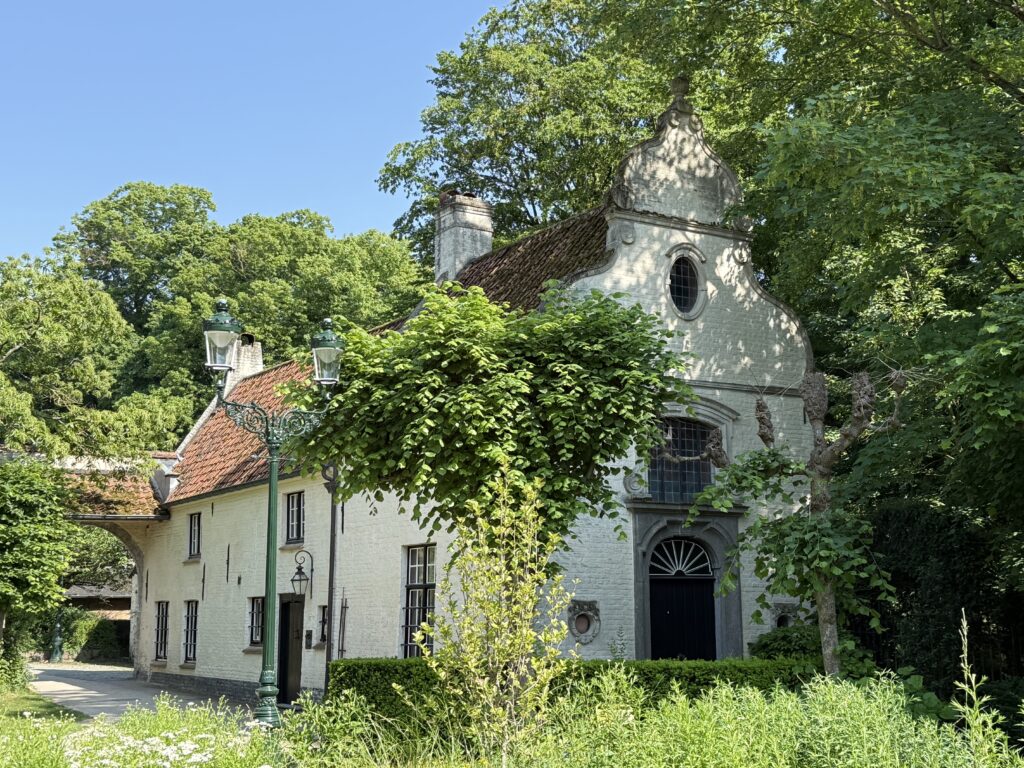
Bruges is a very walkable city with surprises around every corner; with our guides we sauntered through the maze of cobbled streets and then cruised along the waterways on a most fantastic boat trip. Our guide took us along the canal to the ‘Princely Beguinage Ten Wijngaerde’ which was founded in 1245. This was once the home of the beguines, emancipated lay-women who led a celibate and pious life, mostly in silence. For centuries the Begijnhof has continuously been inhabited exclusively by women.
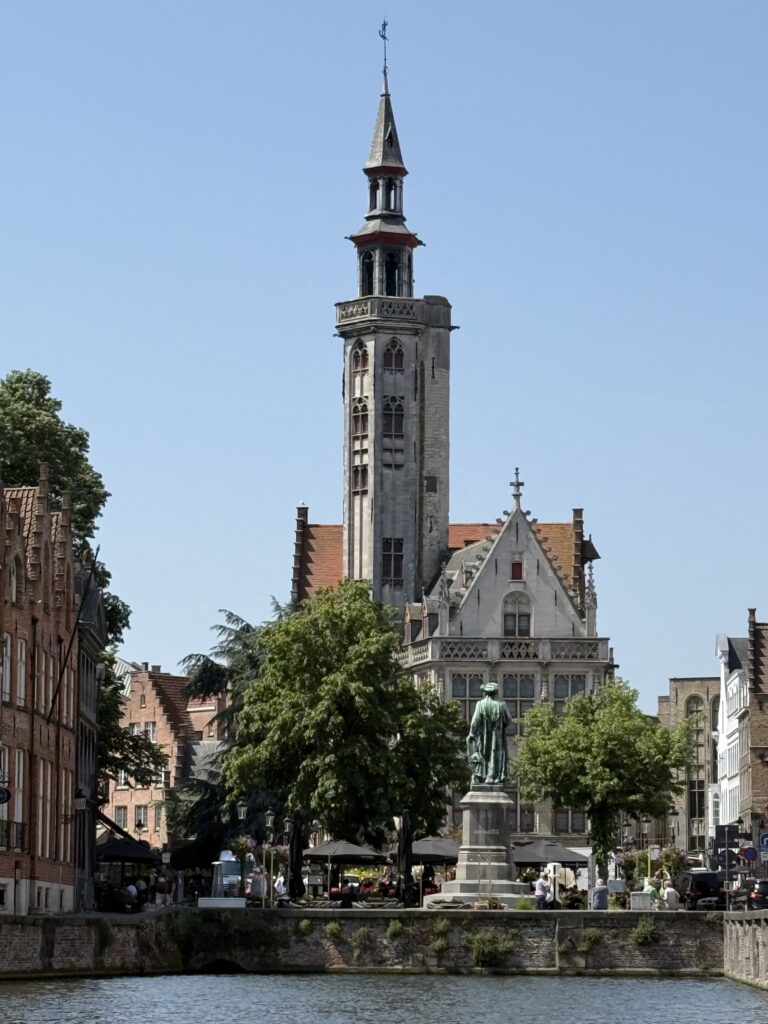
We wound our way to one of the main shopping streets where we paused on the bridge to take in the view down to Sint-Janskaai and learn a little of the 800 year old history of Saint John’s hospital before carrying on past the Church of our Lady, a key landmark of Bruges’s skyline. This RC church boasts the world’s third highest brick church tower stretching 115.6m into the sky and the altarpiece enshrines the most celebrated art treasure in the church, a white marble sculpture of the Madonna and Child by Michelangelo.
After a short wait in the rather warm Spring sunshine we were on board a boat and for the next 40 minutes were enchanted with Bruges from a completely different ‘water-level’ perspective of its historic architecture and hidden gardens. Each turn along the canal gave us even prettier views!
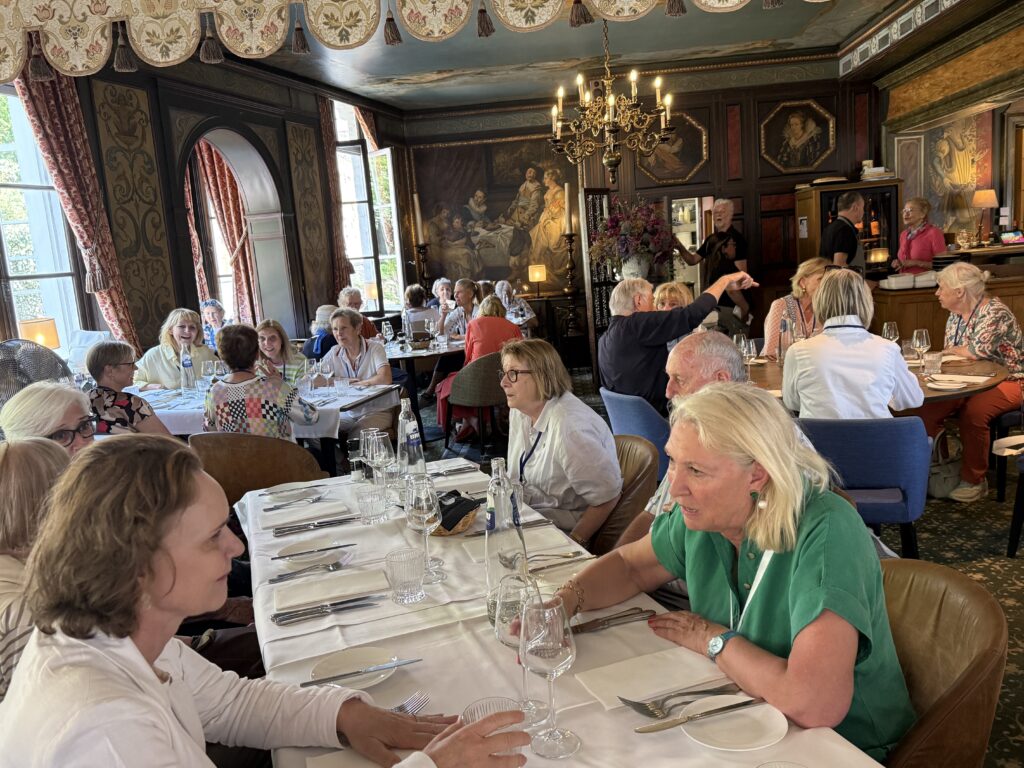
Back on terra firma we were treated to a wonderful 3 course lunch at the Duc de Bourgogne which sat on the canal banks offering nice views. Rested and replete I made my way to the Burg, an intimate and charming square filled with a ’glittering confection of historic architecture, sculpture and gilding’. This was the site of the original 10th century castle where Bruges began. On the west side is the Basilica of the Holy Blood whose upper chapel holds a relic of blood said to be Christ’s.
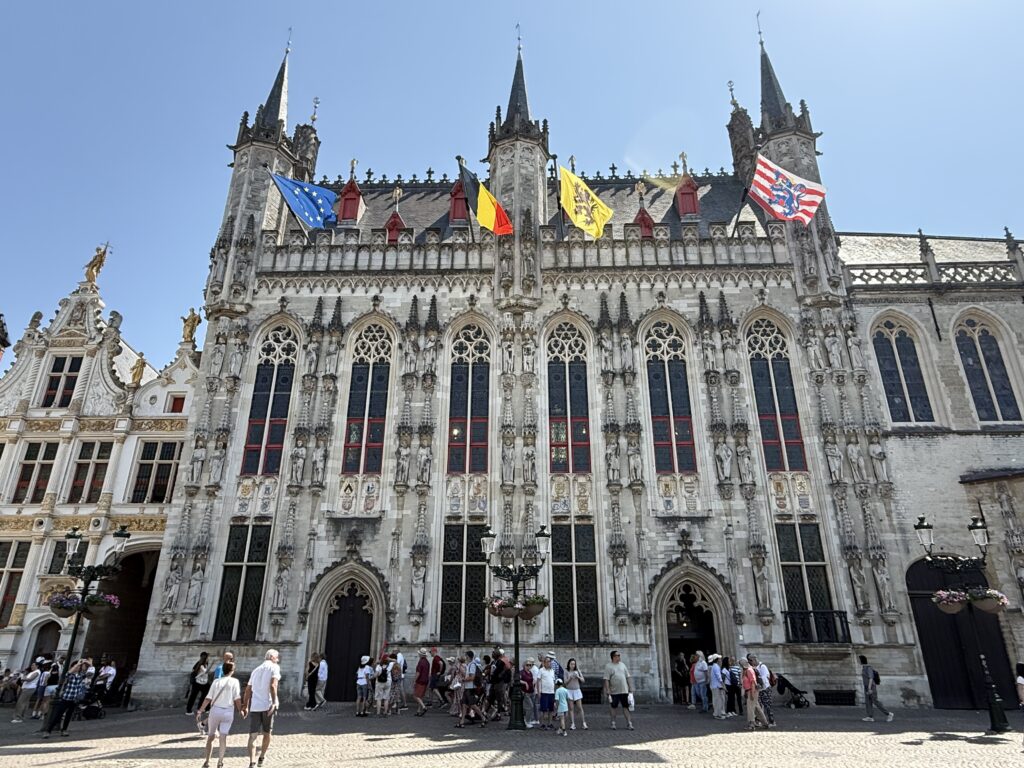
Next to it stood the Stadhuis, one of medieval Europe’s great secular buildings. It’s a great expression of Bruge’s self-confidence in those times. Moving on to the Markt, the central marketplace still retaining much of its original outline and fabulous old step-gabled guild houses, I stopped to take in the views. A most memorable day out!