By Ana Preočanin, London
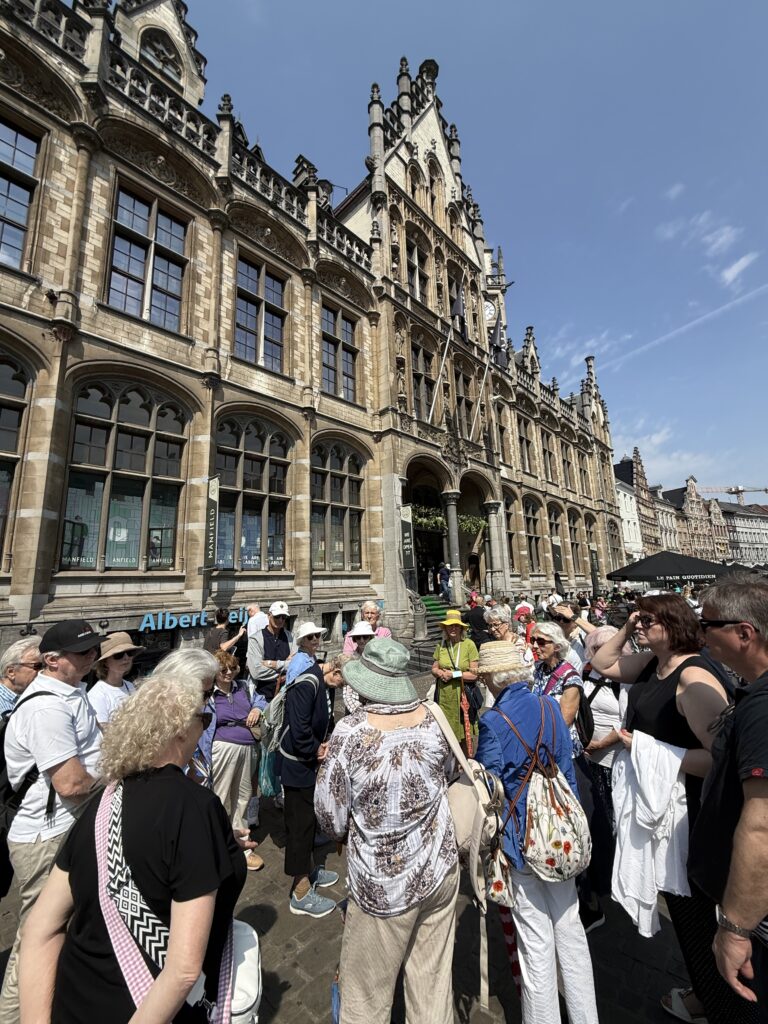
Gent, one of Belgium’s oldest cities and the historic capital of Flanders was one of the optional destinations for us during the Cultural week. It owes its origin to the economic developments that occurred in Flanders in the 10th century and by the 13th it was one of the largest towns in northern Europe. Its astonishing prosperity was based on the manufacture of cloth and its luxury cloths made from English wool were famous throughout Europe until the 15th century. Ghent was unable to compete with the English cloth manufacturers and its decline was accelerated by its loss of access to the sea via the estuary of the Scheldt River in 1648. Commercial and industrial activity was revived with the construction of a port in 1827 and the introduction of cotton-spinning machinery leading to Ghent becoming the centre of the Belgian textiles industry. Today it is a city rich in art treasures and medieval buildings surrounded by the tranquil waters of the rivers Leie and Schelde which reflect the step gabled buildings along their banks. In addition, Ghent is home to a large university and so as you wander the medieval streets you get a sense of grandeur and scale mixed with the bustle and energy of youth.
We started off our tour at the Vrijdamarkt which has a rich history with celebrations being held on the square throughout the centuries and royalty being officially received here at ceremonies known as Joyous Entries. But the square is also the place where executions took place. We swiftly moved on to the Graslei and Korenlei quays which are departure points for the canal boat trips. They are lined with the most gorgeous step-gabled guildhouses of merchants and tradesmen that date back to the 12th century.
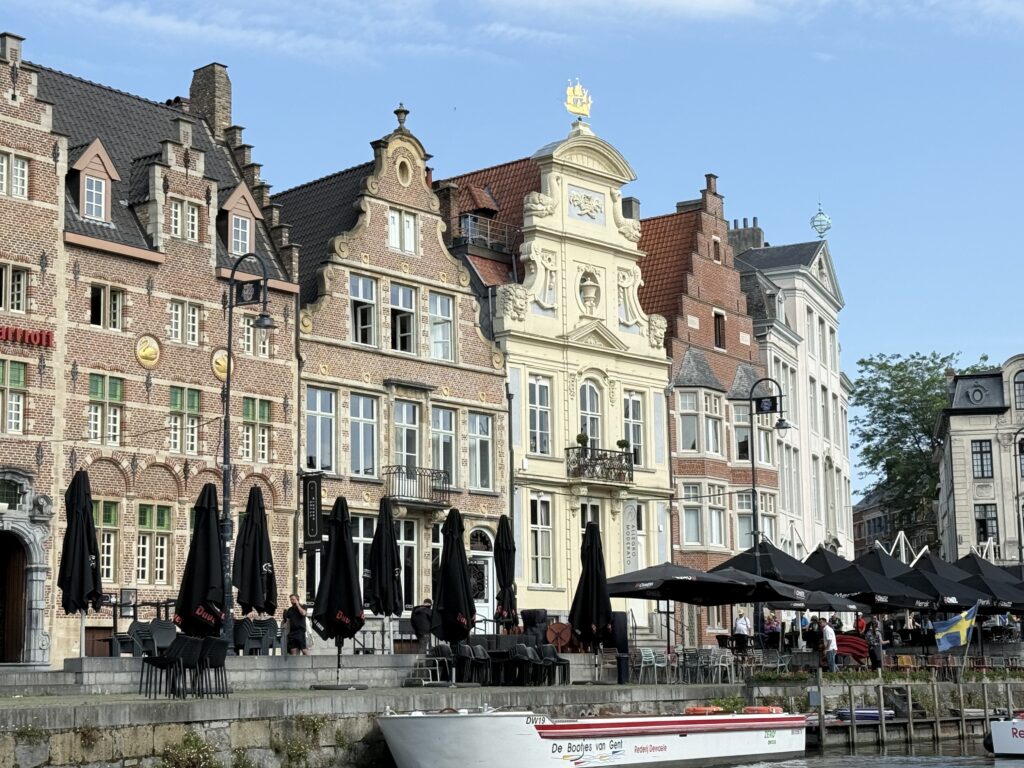
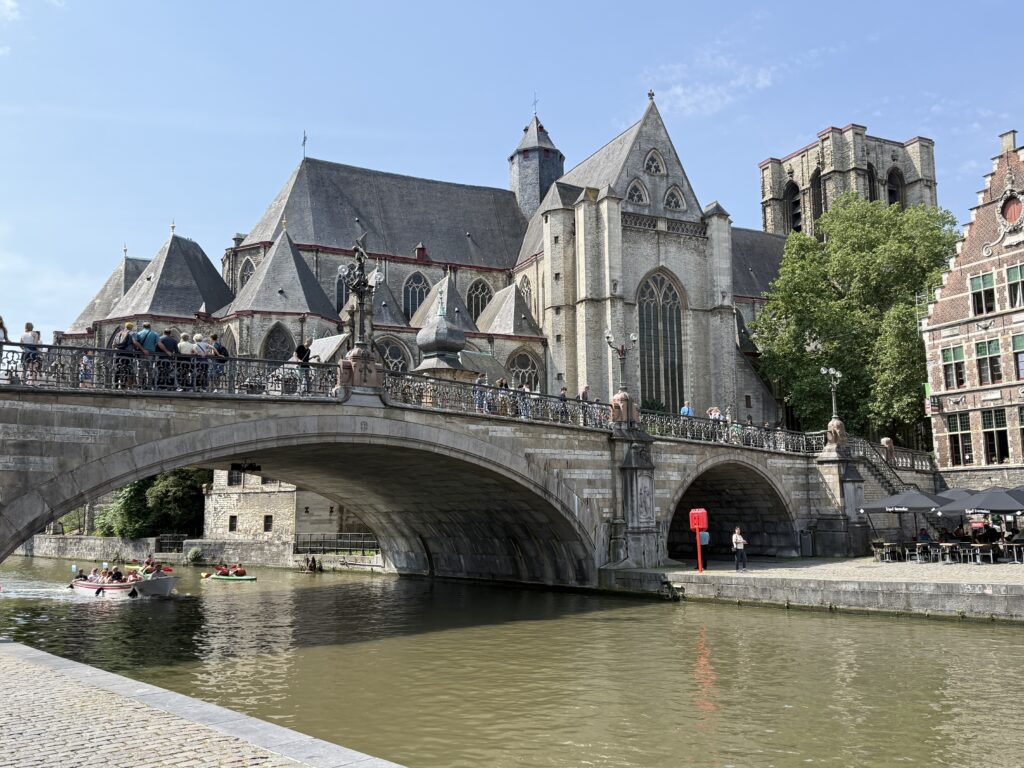
Highlights on the canal tour included Sint-Niklasskerk and its famous tower, the tall spires of Ghent’s other famous towers, St Bravo’s Cathedral and the Belfry (a recognized UNESCO World Heritage site), the red Groot Kanon, Het Rabot and the imposing 12th century Gravensteen – the castle of the Counts.
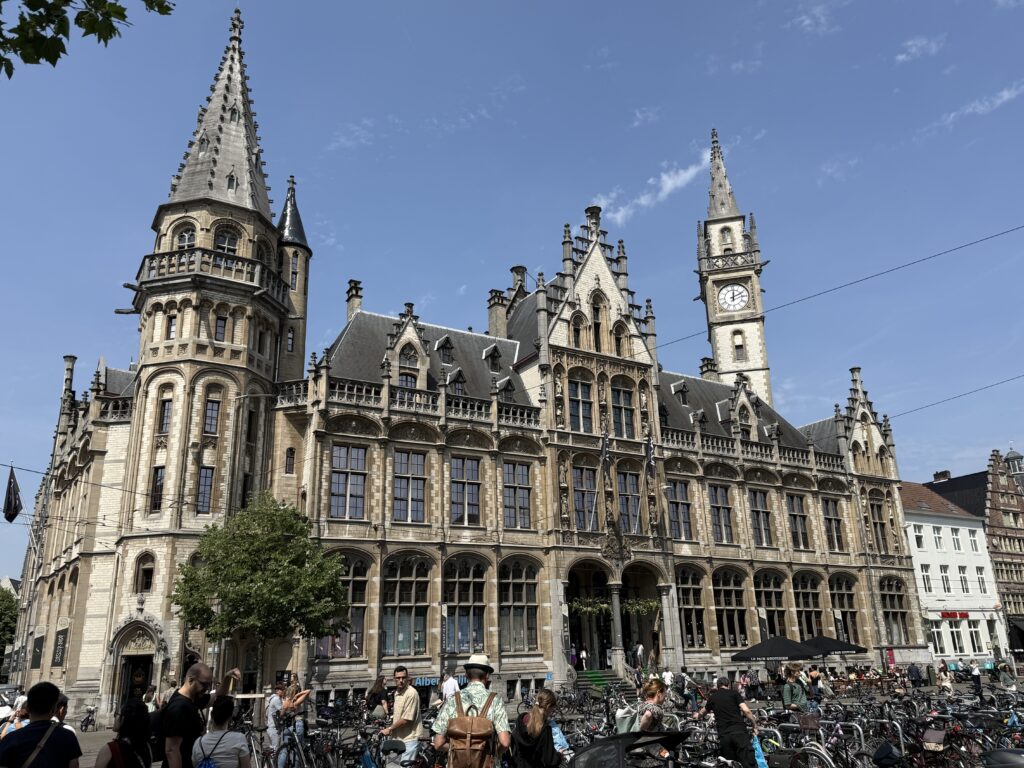
Our tour of Ghent continued through the historic centre including a stop at the former Central post office building which was completed in 1898, but thanks to its neo-Gothic style it looks hundreds of years older! The richly decorated building with a beautiful 52m clock tower, is now a shopping centre and luxury hotel. We also paused at the City Pavilion (Stadshal) which is a multifunctional and open structure designed by the architects Robbrecht & Daem/Marie-José Van Hee. The roof design and the use of concrete, wood and glass are very striking and its position near the Cathedral is most eye-catching.
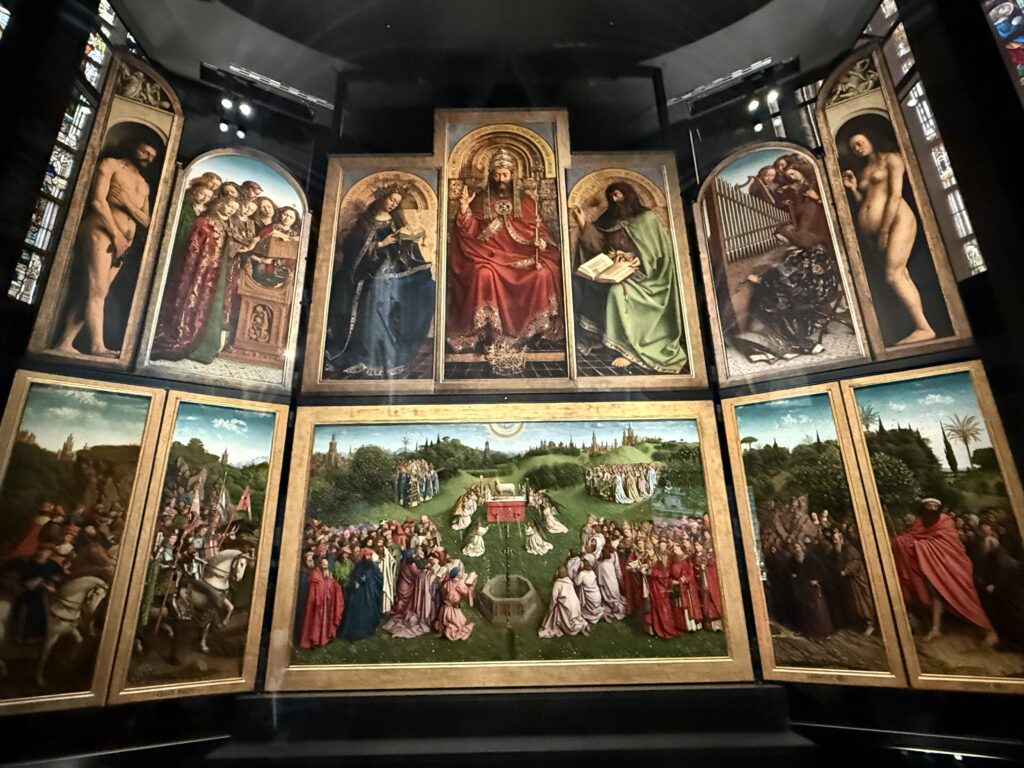
For many of us the crowning glory of the trip was the opportunity to visit St. Bravo Cathedral and its greatest treasure, the multi-paneled 15th century altar-piece, The Adoration of the Mystic Lamb by brothers Hubert and Jan van Eyck.
An architectural treasure trove filled with medieval history, Ghent hosted a most glorious day out.